Key takeaways
- A founder who books a visit is mostly sold. The 45 minutes on your floor decide the rest.
- Route it: QA lab, the line that would run their SKU, changeover — then end seated, with an ask.
- Whoever owns the area answers the questions in it. Founders buy your people, not your steel.
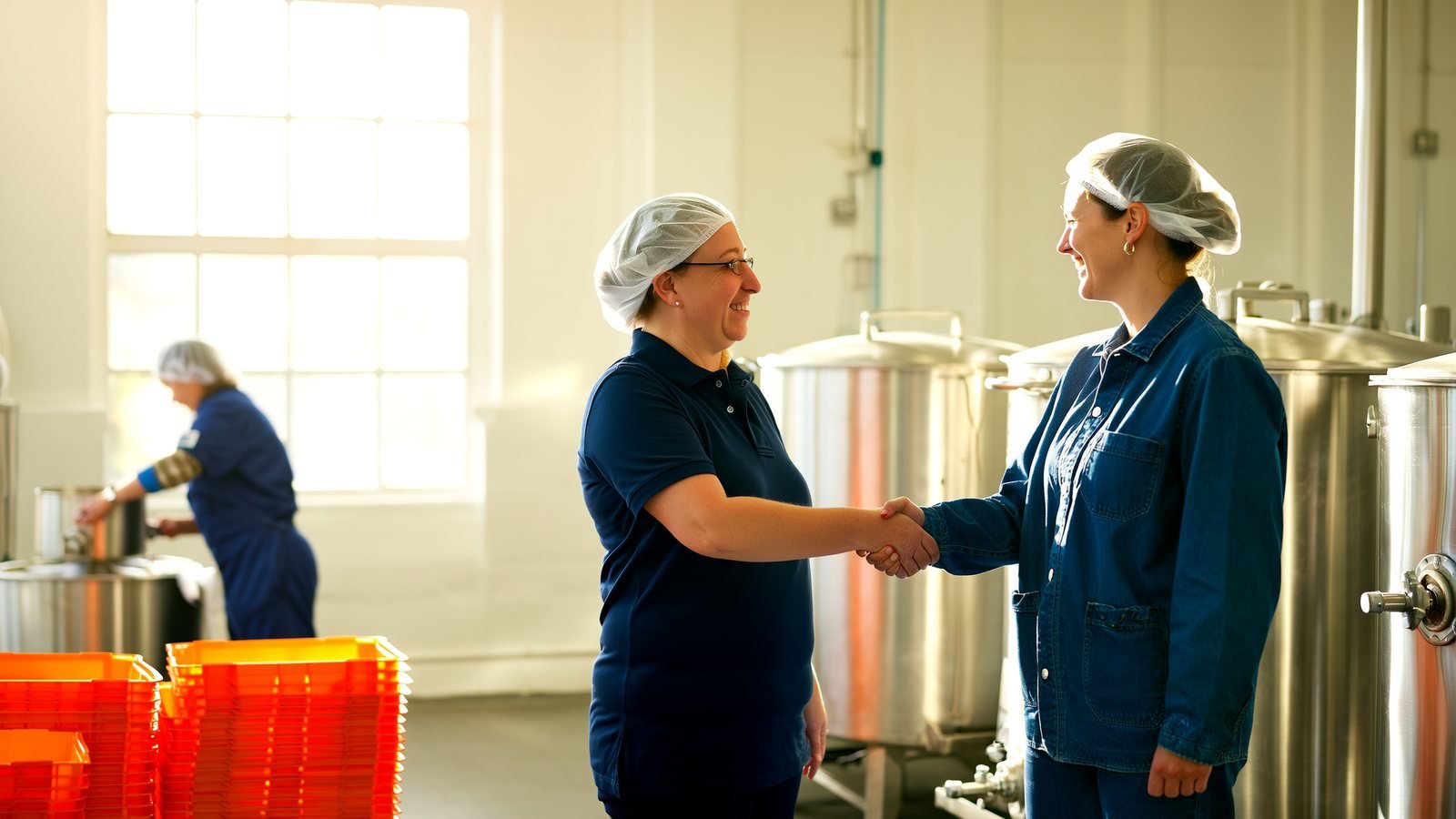
Plant tour best practices, in most of what's written, come down to safety vests and a visitor log. Fine — do those. But when a brand founder spends a flight and a hotel night to walk your floor, the deal is mostly decided before they land. The tour is the close. Here's how to run one that ends with an ask instead of a handshake and six weeks of silence.
The tour is the close. Treat it that way.
Nobody flies to Ohio to tour a sauce plant for fun. By the time a founder books a customer plant visit, they've seen your pricing, your capabilities deck, and probably your answer to their RFQ. They're not coming to learn what you do. They're coming to answer one question: can I trust these people with my product when a run goes wrong at 2 a.m.?
That changes what the tour is for. You're not showing equipment. Stainless looks the same in every plant, and they're touring two or three plants on the same trip, back to back. You're showing judgment, cleanliness, and people. In the full arc from first call to first run, this is the highest-leverage hour you'll get.
One caveat before the route: none of this matters if nobody's booking visits. Getting founders into your lobby is a pipeline problem — the problem Feed The Line's co-packer sales engine exists to solve. This post covers what happens after the pipeline works.
Plant tour best practices start the day before
Most tours are lost before the visitor parks. The prep takes about 90 minutes. Most plants skip it.
- Confirm what's running. If the line that would run their SKU is dark on tour day, reschedule. A silent line sells nothing.
- Walk the route yourself, 24 hours out. You stopped seeing your own plant around year two. The founder sees the taped-up guard, the weeping gasket, the pallet parked in front of the eyewash station — inside ten minutes.
- Brief the three people who'll speak. Visitor names, the brand, their volumes, what they'll probably ask.
- Reread the paper trail. Their spec sheet, their allergen profile, your response to their RFQ. Nothing kills trust faster than "remind me what you make?"
- Clean like it's an audit. A founder can't judge your fill accuracy. They can judge a greasy handrail.
And be honest about who earns a tour at all. Hosting one burns three to four staff-hours across your best people. That's why you vet the brand before you extend the invite — a founder with no volume, no money, and no forecast costs the same to host as one who'll fill a shift.
The 45-minute route
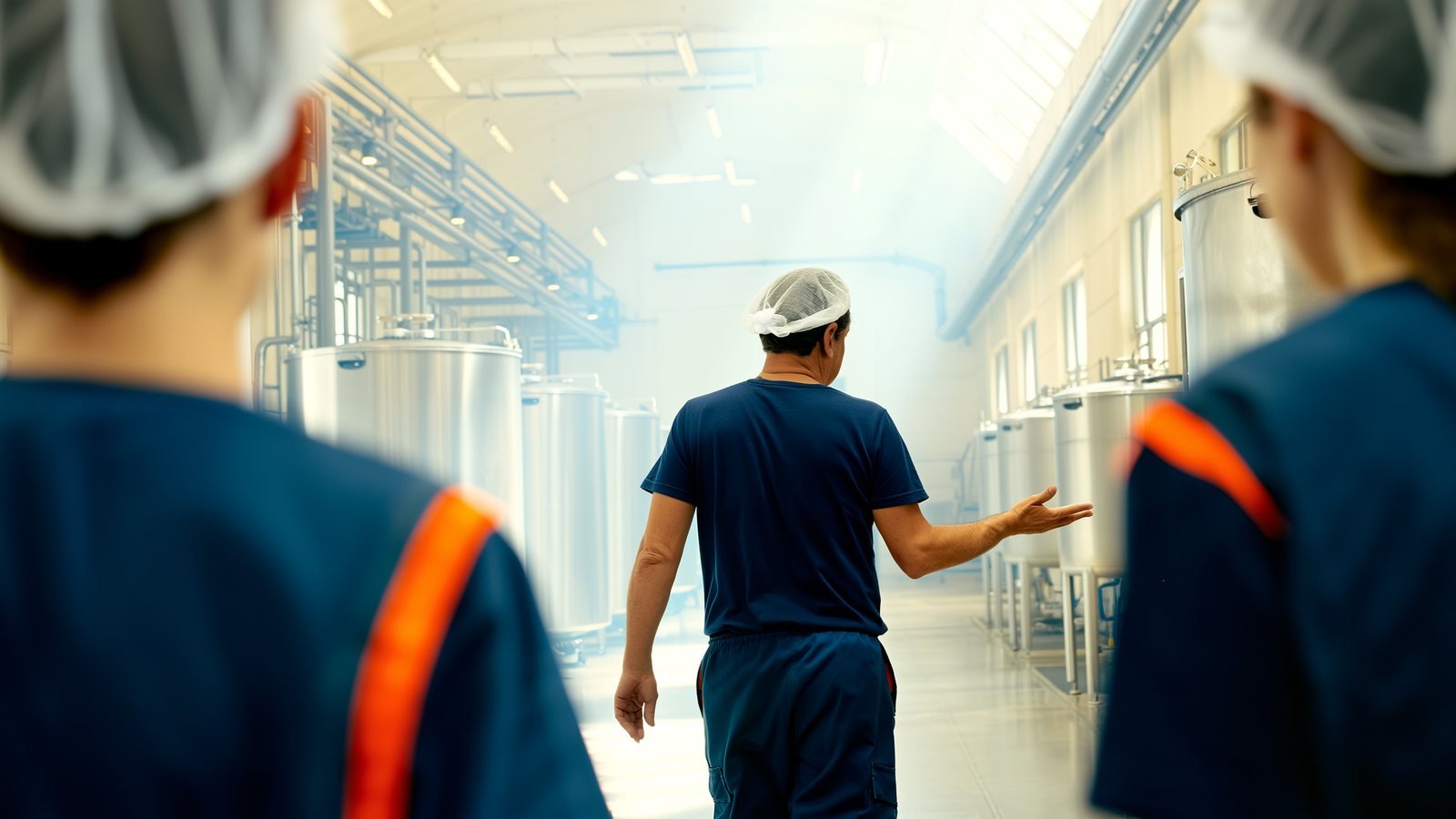
Forty-five minutes walking, ten to fifteen seated at the end. Longer and you're padding. Shorter and it reads like you're hiding something. Walk in process order — receiving toward shipping — and never backtrack. The route:
- Lobby and gear-up (5 minutes). Introductions, hairnets, and a one-line agenda: "We'll walk the floor, end in the conference room, and talk about your product."
- QA lab (10 minutes). Your trust engine. Show live swab logs, retained samples, your hold-and-release process. Not the framed certificates — the daily habit.
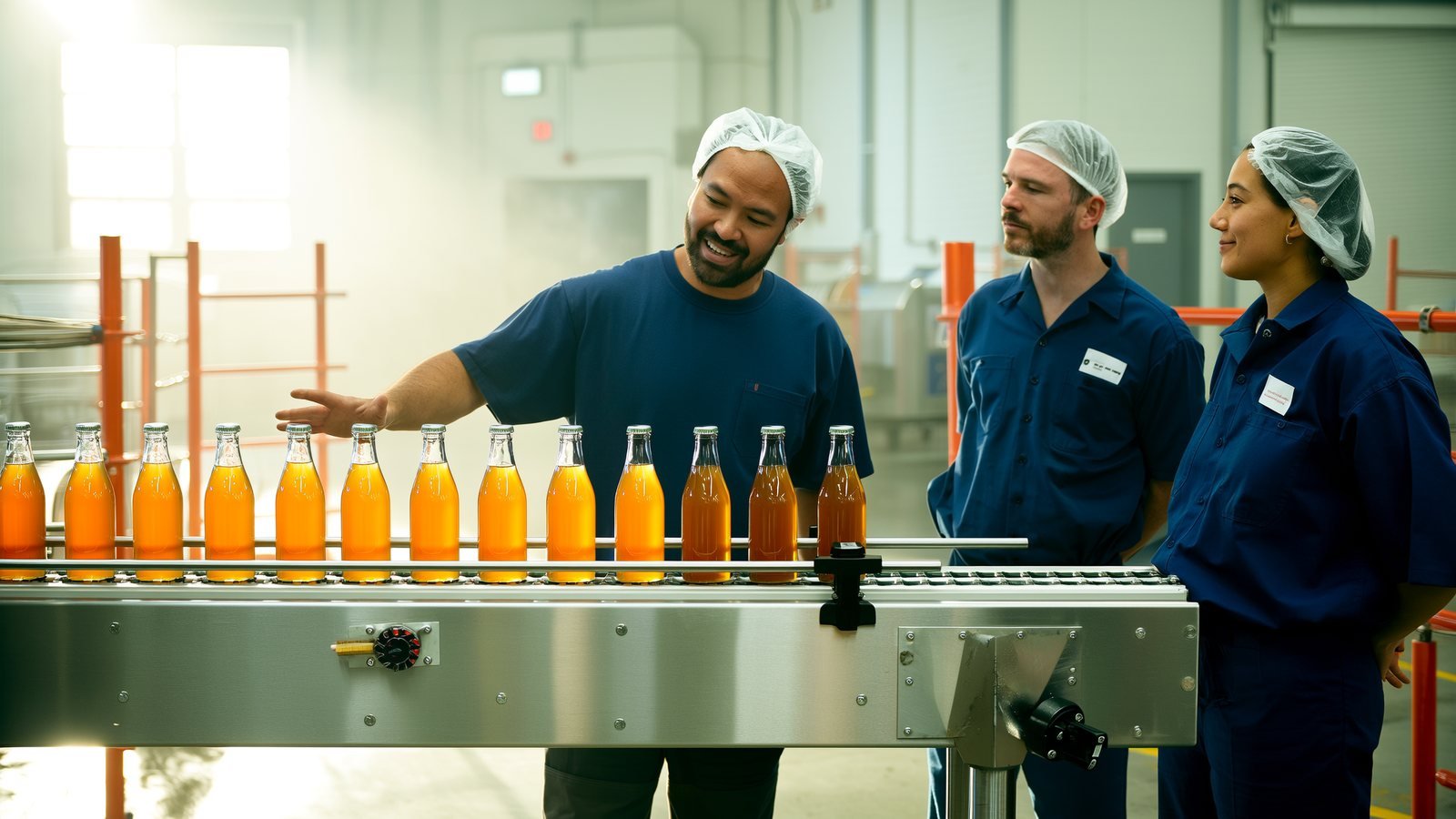
- The line that would run their SKU (15 minutes). The centerpiece. Ideally running something in their category. Stand where they can watch a full cycle, and let them linger. This is what they flew in for.
- Changeover and sanitation (10 minutes). Emerging brands live on short runs, and short runs live on changeover. If a washdown is in progress, better still — show the thing every other plant hides.
- Conference room (5 minutes to land, then the sit-down). Chairs, water, and retained samples from their category already on the table.
Warehouse and receiving get covered in passing, on the way through. Nobody signs because of your racking.
Who talks — and when
The owner opens and closes. The middle belongs to the floor.
Your QA manager owns the lab. Your line lead owns the line. The rule is simple: whoever owns the area answers the questions asked in it. When a founder asks about foreign-material controls and the answer comes from the person who runs the metal detector checks every two hours — in her own words, not yours — that's worth more than anything you'll say all day.
Coach against two failure modes. The monologue: an owner who narrates every valve for an hour and never lets the visitor talk. And the silent tour: a shrugging walk-through where questions bounce off "you'd have to ask someone else." Plant a few questions with your team beforehand if you have to. Silence reads as indifference, and indifference reads as risk.
What to show — and what to skip
A factory tour for prospects isn't an open house. Every stop either builds trust or spends time. Sort accordingly:
| Stop | Show or skip | Why |
|---|---|---|
| QA lab with live swab logs | Show | Daily discipline beats framed certificates. |
| The line that would run their SKU | Show | It's the reason they flew in. Give it 15 minutes. |
| Changeover or washdown in progress | Show | Short-run brands buy changeover speed, not slogans. |
| Metal detector and checkweigher checks | Show | Foreign material is a founder's recall nightmare. Show the control working. |
| A line that's down for maintenance | Skip | A dark line invites questions you don't need. Route around it. |
| The certificate binder, page by page | Skip | Email certs before the visit. Walking time is for what paper can't show. |
| War stories about clients who burned you | Skip | Meant as candor. Lands as "this is how he'll talk about me." |
The ask at the end
The sit-down is where most tours die politely. The founder says "this was great," you say "reach out anytime," and the deal evaporates on the drive to the airport. Don't let a plant tour checklist end at the parking lot walk-back.
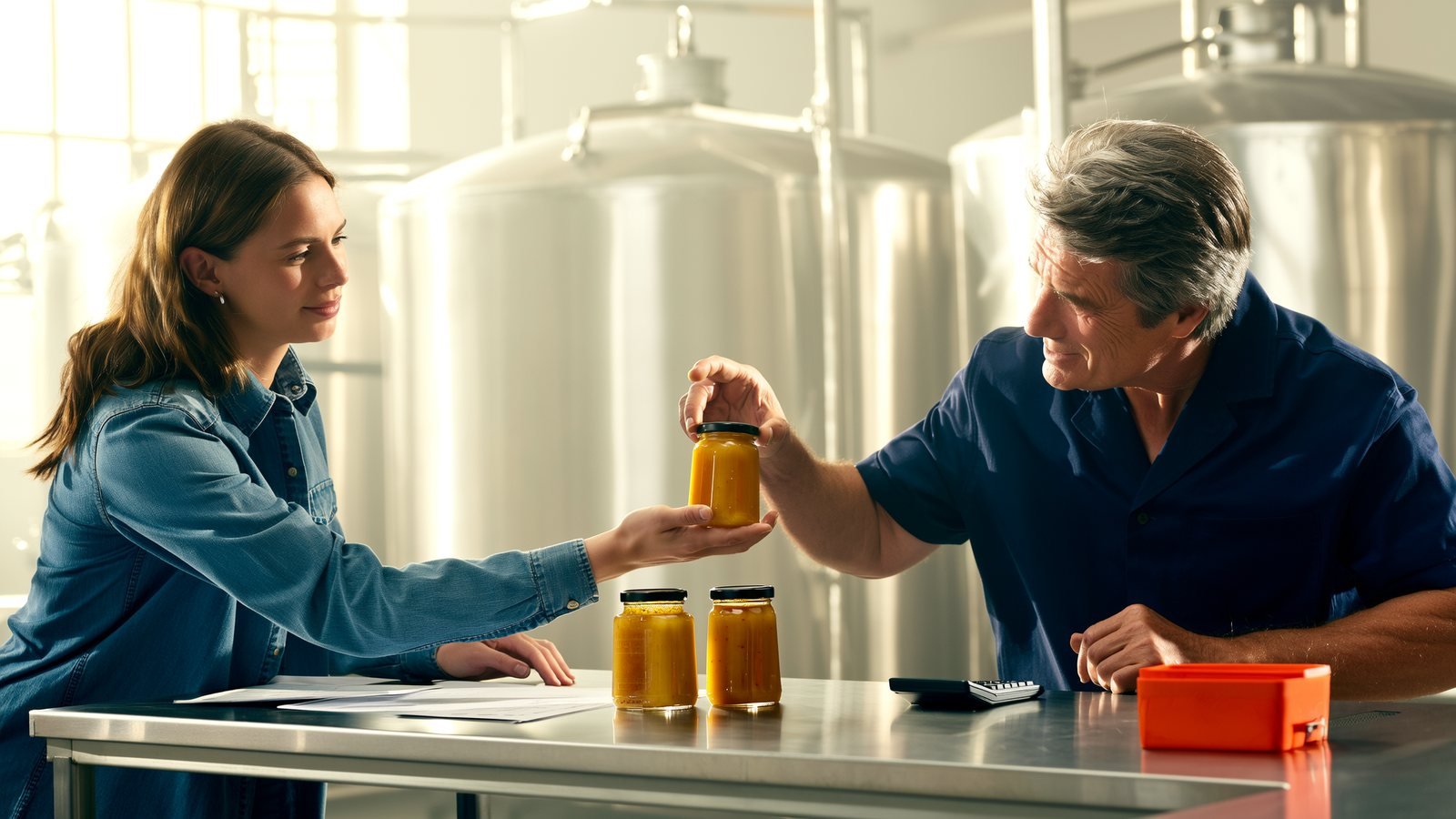
End seated. Take one minute to recap what they saw — the line, the changeover time, the QA process. Then ask a direct question: "We'd like to run your product. What's between here and a first run?"
Whatever comes back — pricing, a trial, a spec question — pin it to a date before anyone stands up. A trial run scheduled for a real week. Pricing confirmed within 48 hours. Their formula on your line within a month. The specific commitment matters less than the fact that one exists and has a date on it.
Then follow up within 24 hours: a short email recapping the visit, the names of the people they met, and the next step with its date attached. Most plants send nothing, and the memory of your washdown fades somewhere over Denver. The plants that win contracts off tours aren't the ones with the newest equipment. They're the ones that treated the walk as a close — route planned, roles assigned, ask ready.
Frequently asked questions
Q-01How long should a plant tour for a prospective customer be?
Forty-five minutes of walking plus 10 to 15 minutes seated at the end. Shorter reads like you're hiding something; longer means you're narrating equipment instead of selling. Walk in process order and end in a room with chairs so you can make a clear ask.
Q-02What should I show a customer on a factory tour?
Three stops carry the tour: your QA lab with live swab logs, the specific line that would run their product, and a changeover or washdown in progress. Skip down lines and the certificate binder — email certs ahead of the visit. Prospects buy daily discipline they can see, not paperwork.
Q-03Should I let prospects take photos during a plant tour?
Yes in most areas, once an NDA is signed — a founder who can show photos to a co-founder or investor moves faster. Restrict proprietary equipment or another client's product on the line, and say so up front so it doesn't feel like hiding. A blanket no-photo rule slows their decision more than it protects you.
Written by
Murtaza Udaypurwala
Founder, Feed The Line · Director, DESENO Media Agency
Murtaza runs Feed The Line, the outbound revenue engine that fills co-packer lines with qualified CPG brands. He writes about capacity economics, MOQ math, and pipeline for food & beverage plant owners.
DESENO ↗