Key takeaways
- The path is longer than anyone admits: qualification → capability pitch → plant tour → trial run → contract, over 2–6 months.
- The plant tour is the close in this industry — coach every first meeting toward a site-visit invitation.
- Price the first contract to earn the second. Don't buy revenue with terms you'll resent by month six.
Referral pipelines stall at the worst possible moment — right after you've added capacity. Getting contracts on purpose, rather than by luck, means running a repeatable path from stranger to signed production schedule. Here's the whole path, with the failure points marked.
Qualify before you quote
The expensive mistake is quoting everyone. Before a proposal leaves the building: does their volume clear your MOQ per SKU (the 4–200× band)? Are they producing or funded to produce? Is the formulation actually ready for your lines? A brand that fails two of three is a time expense wearing a prospect costume. (The screening math: MOQ economics.)
The capability pitch — one page, all numbers
Lines, formats, MOQs per SKU, certifications, capacity windows. The brand is building a comparison spreadsheet; your job is to fill your row completely and credibly. Vague capability statements read as inexperience.
The plant tour is the close
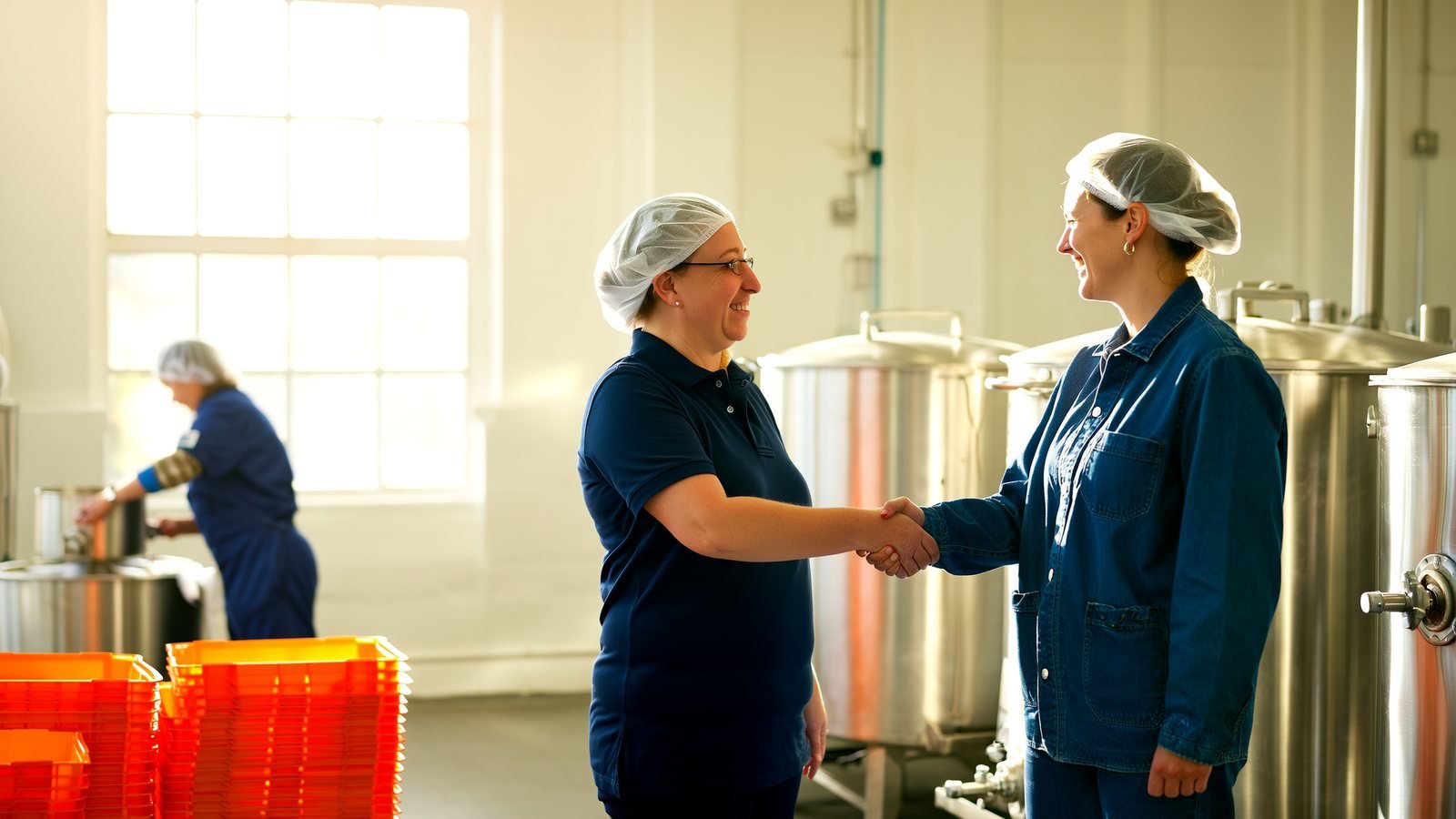
In a handshake industry, nothing replaces a founder walking your floor — seeing the line that will run their product, meeting your QA lead, smelling that the place is clean. Coach every promising first call toward one outcome: "come walk the plant." Deals that include a site visit close at multiples of deals that stay on video calls.
Trial runs that convert
Scope the trial like a small contract: SKUs, specs, QC criteria, price, and — the part everyone forgets — scale-up terms agreed in advance. A trial without pre-agreed scale-up pricing is a second negotiation waiting to ambush a good relationship.
Terms that protect your line time
- Minimum commitments — quarterly or annual, so the schedule you reserved is paid for.
- Rolling forecasts with lock windows, so brand optimism doesn't become your inventory problem.
- Raw-material liability assigned in writing — who eats the ingredients if a launch slips.
- Change-order pricing for spec revisions, because there will be spec revisions.

Frequently asked questions
Q-01How long does it take to sign a co-packing contract?
From first conversation to first production run, typically 2–6 months — qualification, samples, a plant visit, a trial run, and terms. Anyone promising signed contracts from cold outreach in weeks is lying.
Q-02What should a co-packing trial run include?
A scoped SKU list, agreed specs and QC criteria, honest trial pricing, and pre-agreed scale-up terms so a successful trial converts without a second negotiation.
Q-03What contract terms protect a co-packer's schedule?
Minimum annual or quarterly commitments, rolling forecasts with lock windows, raw-material liability assignments, and change-order pricing for spec revisions.
Written by
Akash Garg
Director, DESENO Media Agency
Akash is Director at DESENO Media Agency, the studio behind Feed The Line. He writes about how food & beverage manufacturers turn plant capability into positioning, pipeline, and signed contracts.
DESENO ↗