Key takeaways
- When a brand googles "co-packer + your category + your state," you either exist or you don't.
- Category and location pages do the ranking. Certifications and minimums do the converting.
- SEO pays in 6-12 months. Outbound pays in weeks. Run both — they feed each other.
Somewhere tonight, a brand founder is typing "sauce co-packer Ohio" into Google. You're either on that first page or you don't exist — there's no partial credit. SEO for food manufacturers isn't blogging, backlinks, or a $4,000-a-month retainer. It's ten plain pages that answer the questions every brand asks anyway, built once, pulling inquiries for years.
Why SEO for Food Manufacturers Is Different
Google "SEO for manufacturers" and every result is an agency pitching a retainer. They'll talk about content calendars, domain authority, and thought leadership, because that's what they sell. None of it maps to how co-packing actually gets bought.
A founder who needs a co-packer doesn't read your blog for six weeks and slowly warm up. She searches three or four phrases, opens five tabs, and builds a shortlist in one sitting. We've mapped where CPG brands look when they need a co-packer — referrals, directories, LinkedIn, and search — and search is the only channel where showing up costs you nothing per lead.
Here's what the agencies won't say: the volume is tiny. Most co-packing terms get 50-500 searches a month. That's why they don't chase them — there's nothing to put in a monthly report. It's also exactly why those terms matter to you. The person typing "gummy co-packer low minimum" isn't browsing. She has a product, a deadline, and a budget. Five inquiries a month is a rounding error on an agency dashboard and a full pipeline for a $5M plant.
The 10 Pages a Plant Site Needs
You don't need a content strategy. Manufacturing website lead generation, for a co-packer, comes down to ten pages. Most plant sites have four: a homepage with a stock photo of wheat, an about page from 2016, a photo gallery, and a contact form. Here's the full set:
- Homepage that answers three questions above the fold: what you run, where you are, what your minimums start at.
- Capabilities — lines, batch sizes, fill sizes and formats, packaging you can run.
- Certifications — SQF or BRC level, organic, kosher, FDA registration. Post the actual certificates, not a row of logos.
- One page per category you run — "hot sauce co-packing," "dry blend co-packing," "cold brew co-packing." These are your SEO workhorses.
- A location page — "co-packer in [your state]," plus the metros within a day's freight. Brands filter by geography before anything else.
- Minimums and process — MOQs by format, typical timeline from first call to first run, what onboarding looks like.
- Equipment list — fillers, cappers, retort, HTST, whatever you've got. Technical founders search for equipment by name.
- FAQ — who supplies packaging, whether you do R&D, how pricing works, lead times.
- About — real photos of your floor and your people, not renderings. Names and faces close deals.
- Contact/RFQ — a short form, a direct email, and a phone number. Every extra form field costs you inquiries.
Pages 4 and 5 do the ranking. The other eight do the converting — they're what a founder reads in the ninety seconds before deciding whether to email you. We've broken down what CPG brands check on a co-packer's website in detail; the short version is certifications, minimums, and proof you're a real plant.
Keywords That Convert (and Ones That Waste Your Time)
Forget keyword tools for a minute. Co-packing searches follow five patterns, and only four deserve a page:
| Search pattern | Example | Who's typing it | Worth a page? |
|---|---|---|---|
| Co-packer + category | "hot sauce co-packer" | A brand with a spec sheet and a deadline | Yes — one per category you run |
| Co-packer + state or metro | "co-packer in North Carolina" | A brand that cares about freight and site visits | Yes |
| Category + contract manufacturer | "beverage contract manufacturer" | Bigger brands and procurement teams | Yes — use both phrasings on the same page |
| Low-minimum modifiers | "low MOQ snack co-packer" | Early-stage brands | Only if you actually take small runs |
| How-to searches | "how to find a co-packer" | Someone six months from buying | No — let the directories have it |
Write the pages like you'd answer the phone. 500-800 words each, plain language, real numbers. "Our sauce line runs 100 to 400 bottles a minute, glass or PET, minimum run 2,500 cases" beats three paragraphs about your commitment to quality.
What the Search Looks Like From the Brand's Side
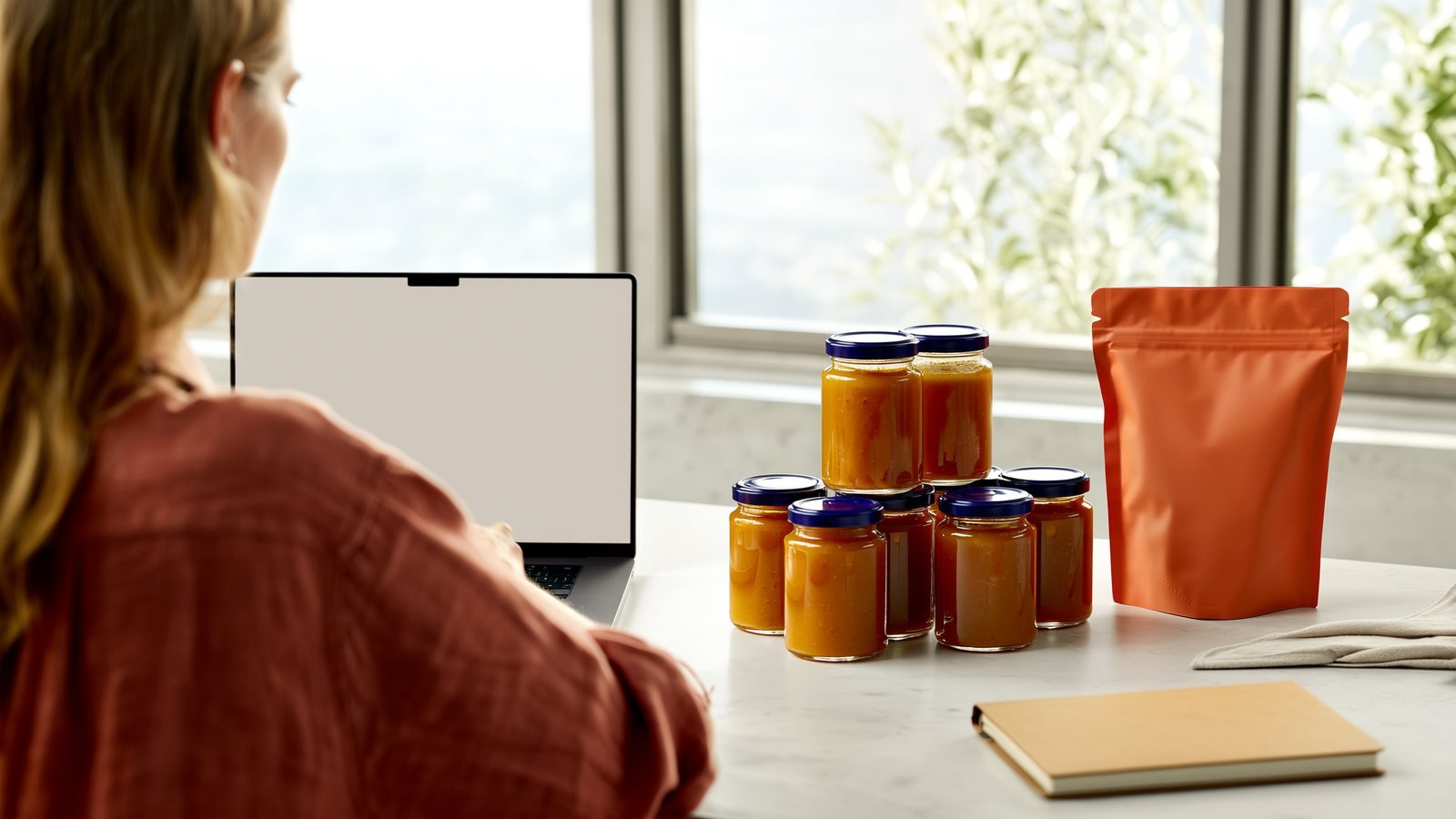
Picture the buyer. It's 11pm. A founder sits at her kitchen table with product samples and a laptop, because her current co-packer missed a third run date and a retailer wants a commitment by Friday. She searches "sauce co-packer Midwest." She opens five sites.
Three die in under a minute: one lists no certifications, one shows no minimums anywhere, one has a contact form and no phone number. Two get an email that night. That whole competition — the only one that matters — happened while you were asleep. You weren't entered unless your pages were.
Why Search Alone Won't Fill Your Line
Search catches brands already looking — that's its magic and its ceiling. In any given month, only a sliver of the brands that fit your plant are actively searching. The rest are grinding through a co-packer who misses dates, outgrowing a commercial kitchen, or six weeks from a retail commitment that changes everything. They're not typing anything into Google yet.
Reaching them takes outbound: a list, a straight email, a follow-up. It's the same logic as showing up on LinkedIn as a plant owner — go where the buyer already is instead of waiting to be found. That's the model we run at Feed The Line: outbound that books brand meetings now while your ten pages compound in the background. The two channels feed each other, too. A founder who gets your cold email searches your plant name within the hour — and lands on either ten pages of answers or a stock photo of wheat.
The 90-Day DIY Version
No agency required. Here's the sequence:
Weekend one: search "co-packer + your top category + your state" in an incognito window. Note who ranks. Read their pages. You'll find gaps — no minimums listed, no certificates posted — that you can beat on day one.
Weeks 1-4: write your category and location pages. You already know every answer; you give them on the phone daily. One page a week, dictated into your phone and cleaned up, is enough.
Weeks 5-8: fix the converting pages — certifications with the PDFs attached, minimums, equipment, real photos of the floor.
Weeks 9-12: get listed in the two or three directories brands actually use, and make sure your Google Business Profile says "co-packer," not "warehouse."
Total cost if you hire out the site work: $3,000-$10,000, once. Compare that to a 10x10 trade show booth at $15,000-$40,000 all-in for three days of foot traffic. The pages work every night — including the night your competitor misses a run date.
Frequently asked questions
Q-01How do CPG brands find co-packers?
Four main channels: referrals from their network, Google searches like "co-packer + category + state," industry directories, and LinkedIn. Search is the only one where showing up costs nothing per lead — a category page that ranks works every night for years. Most brands use two or three channels at once and build a shortlist in a single sitting.
Q-02Is SEO worth it for a small food manufacturer?
Yes, precisely because the search volumes are small. Terms like "hot sauce co-packer" get a few hundred searches a month, so agencies ignore them — but nearly every searcher is a buyer with a spec sheet and a deadline. Ten pages built once can pull qualified inquiries for years at close to zero ongoing cost.
Q-03What pages should a co-packer website have?
Ten: a homepage, capabilities, certifications, one page per product category, a location page, minimums and process, an equipment list, an FAQ, an about page with real photos, and a contact page with a phone number. The category and location pages do the ranking. The certifications, minimums, and photos do the converting.
Written by
Akash Garg
Director, DESENO Media Agency
Akash is Director at DESENO Media Agency, the studio behind Feed The Line. He writes about how food & beverage manufacturers turn plant capability into positioning, pipeline, and signed contracts.
DESENO ↗